What a good editorial letter actually says
Most authors expect a verdict. What they need is a map. We asked nine editors to share the letters that changed a book — and the sentences that did the work.
By Imogen Hartwell

An editorial letter is not a report card. It is a working document, written to be argued with, and the best ones read like a conversation already in progress. The letters that change books tend to open by describing the novel the editor actually read — not the one the author intended — because the gap between those two books is where all the useful work lives.
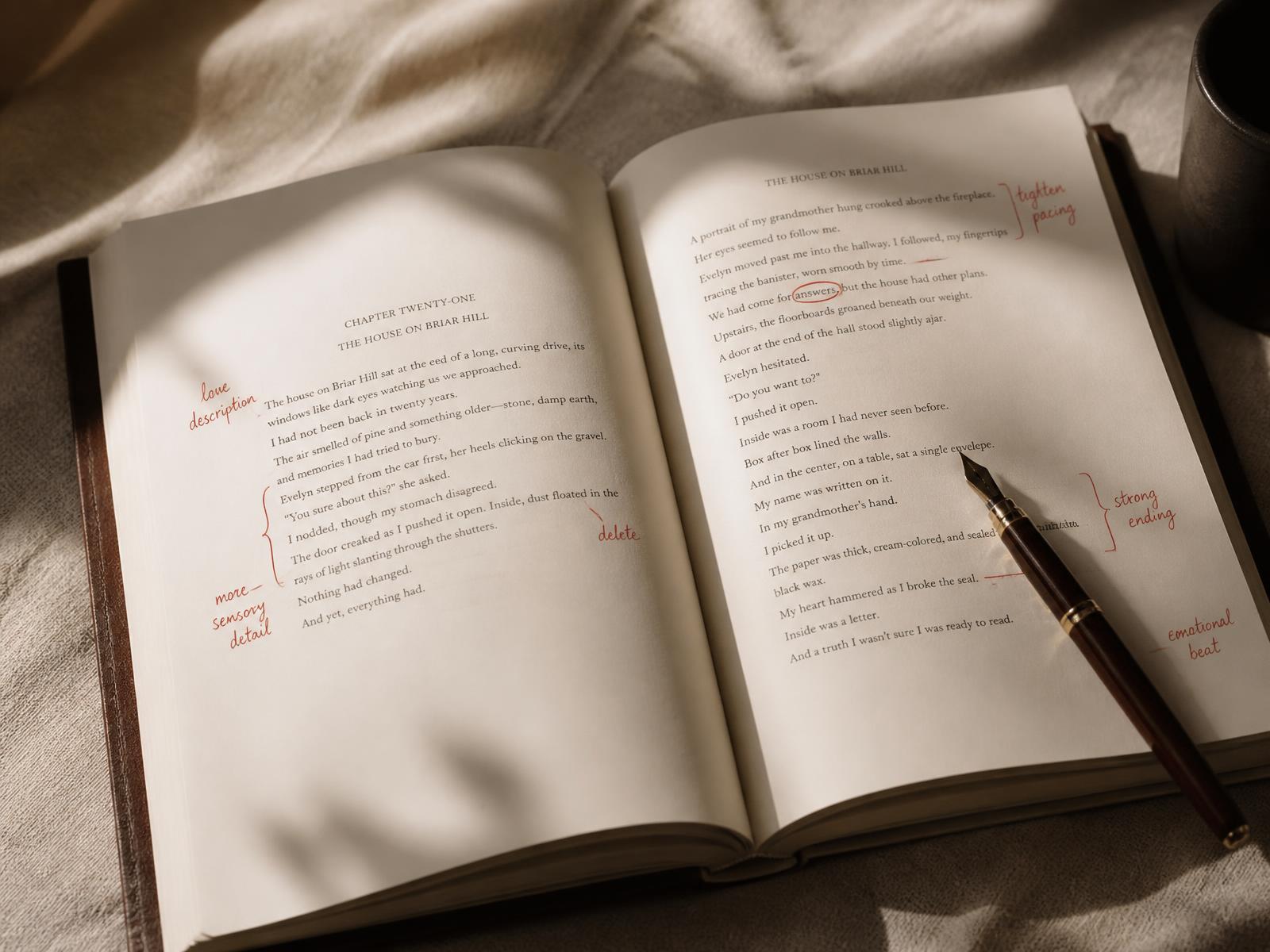
The second move is diagnosis. Not 'the middle drags', but 'chapters eleven to seventeen repeat the same emotional beat because Nell never loses anything she cannot recover'. A named cause invites a fix; a symptom just makes an author anxious.
Third comes the hierarchy. A ten-page letter that treats a structural collapse and a fondness for semicolons with the same seriousness will paralyse the person receiving it. Good editors rank their notes and say so plainly: fix this first, and half the smaller notes will dissolve on their own.
Finally, the letter should say what is working, and say it precisely enough to be believed. Vague praise is worse than none — it teaches the author nothing about which instincts to trust in the next draft. 'Your dialogue carries exposition without ever sounding like exposition' is a note an author can use for the rest of their career.